About
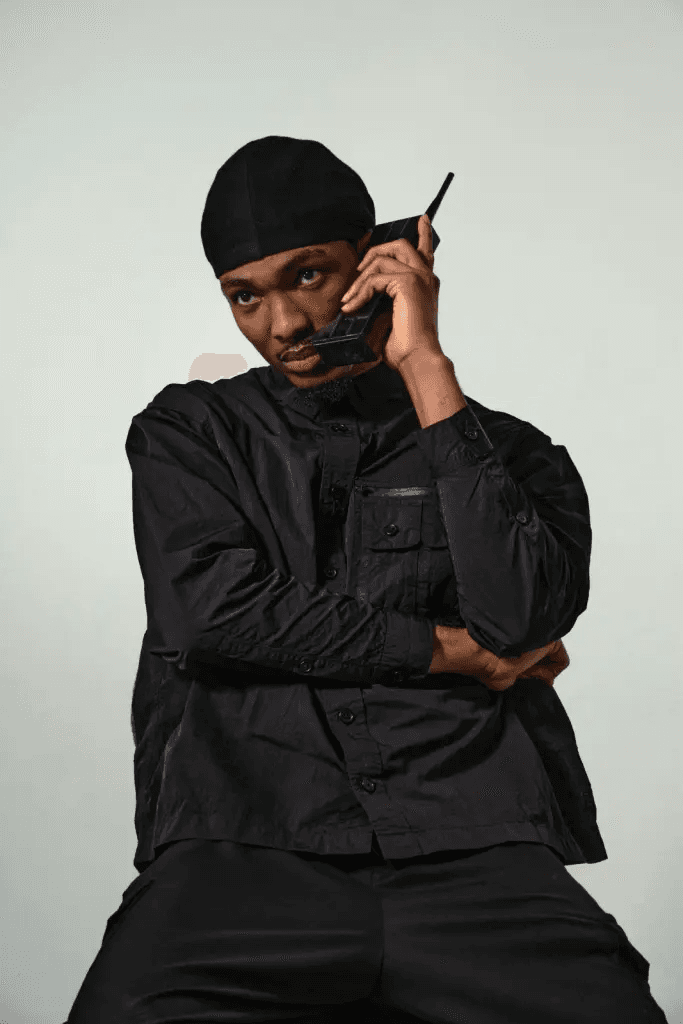
UDO is a multidisciplinary artist and creative technologist working across installation, music, and performance — usually more than one of them inside the same piece. The practice doesn’t organise itself by medium. Fear & Faith II uses four-wall projection and a bass-driven soundscape to put a personal story of recovery into a room you can stand inside; Infinite Realms hands the same instincts to a room full of people in Nigeria and asks what they build with them. Different outputs, one question underneath: what happens when technology stops asking to be noticed, and starts making room for feeling instead.
Why technology
It entered the practice first as a day job, not a calling — a computer science background, then years in digital marketing, using the same tools now inside the installations: code, systems, an audience’s attention as something to be designed for. What changed was the intention behind them. Marketing asks technology to hold attention. Art asks it to release it — to get out of the way long enough for someone to feel something they weren’t expecting to feel.
Why music
Music arrived alongside that shift and stayed as the throughline everything else moves around — not a separate practice, but the discipline that taught timing, restraint, and the difference between a piece that’s finished and one that’s merely full. An MA in Art and Emerging Technologies at the University of Westminster eventually gave the rest of it a name. The shape of the work existed before the vocabulary did.
Why immersive
Why ask someone to stand inside a piece, rather than watch it from outside? Because a work the audience only observes is still, underneath, a demonstration. A work they stand inside asks something different of them — presence, not observation. That distinction is the actual subject of the practice, technology or no technology: what a room does to the people who agree to be in it together.
Technology, light, code, sound, and space are materials, not the subject. The subject is always what a person feels in the room before they’ve worked out how it was made.
Much of this happens inside TCMO, a London-based collective producing and curating for institutions including the Southbank Centre and the Lewisham Borough of Culture. TCMO’s projects appear throughout the Projects section here, each one credited with UDO’s specific role rather than folded into a single undifferentiated output — the practice is collaborative often, but never anonymous.
“An accomplished piece, blending music, film, and creative technologies to create a hybrid experience with genuine added value.”
The full CV — education, exhibitions, press, and production credits — is available as a PDF.
Download CV